What Luxury Sees in Chinese Craft
Embroidery, paper-cutting, bamboo weaving, and textile traditions continue to offer fashion what it cannot easily invent: memory, texture, and cultural depth.
Luxury has always searched for craft.
Not only because craft looks beautiful, but because it carries something fashion cannot easily manufacture: time, memory, touch, and cultural depth.
In recent years, global luxury houses have increasingly looked toward Chinese heritage craft — not only as decoration, but as a way to create richer visual stories. Embroidery, paper-cutting, bamboo weaving, batik, silverwork, and textile traditions have all entered the language of fashion, sometimes directly, sometimes quietly.
What makes this interesting is not simply that Chinese craft appears on luxury products.
It is that these techniques continue to offer something contemporary fashion constantly seeks: a sense of meaning.
Case Notes 01
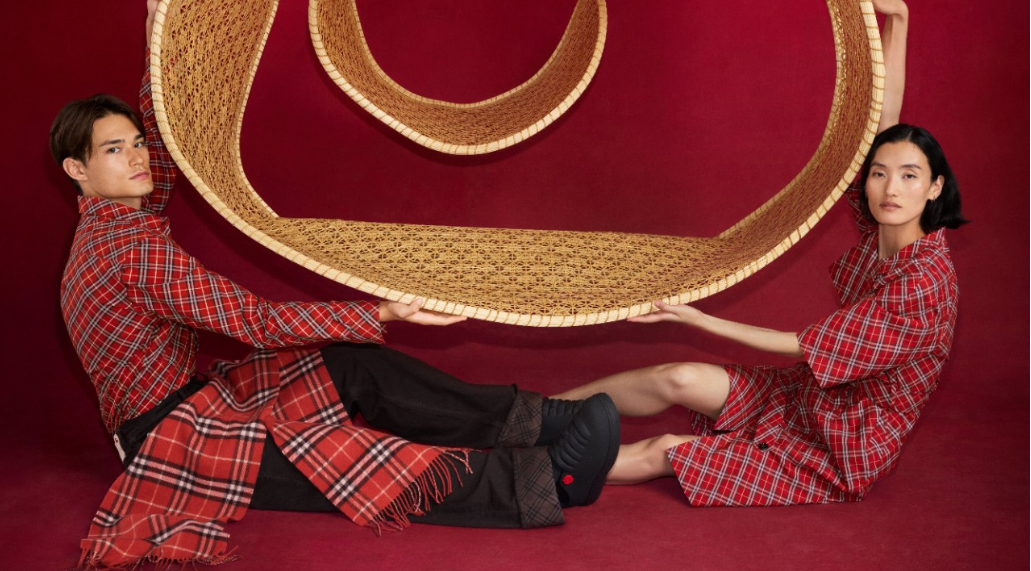
Burberry × Bamboo Weaving
For its 2025 Year of the Snake campaign, Burberry collaborated with Chinese bamboo weaving artist Qian Lihuai, who created nine bamboo sculptures titled Us. The works appeared in the campaign and in selected flagship windows in China, using handwoven bamboo forms to echo ideas of connection, family, and movement.
Bamboo weaving gives softness a structure. In this context, craft becomes more than a festive symbol. It becomes shape, rhythm, and architecture.
02
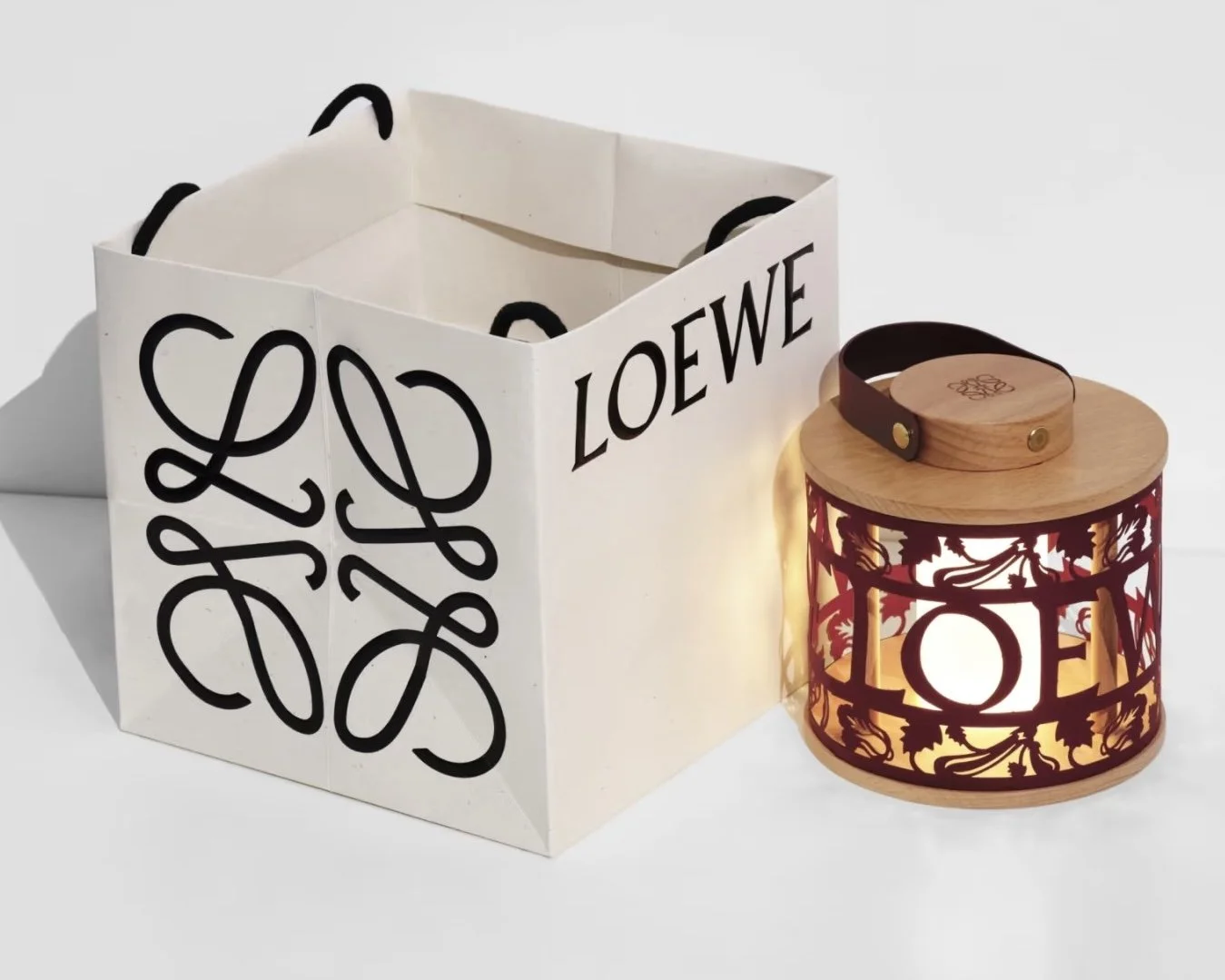
LOEWE × Paper-Cutting and Batik
LOEWE’s 2019 Chinese New Year project travelled to northern Shaanxi to meet paper-cutting folk artists, presenting the craft as a visual language connected to luck, celebration, doors, windows, and spiritual memory. The same project also highlighted batik traditions in Sandu County, where wax-resist dyeing is used to create intricate textile patterns.
Paper-cutting works through absence. Batik works through resistance. Both turn process into image.
For a house like LOEWE, already deeply tied to craft, these traditions sit naturally within a broader conversation about material intelligence.
03
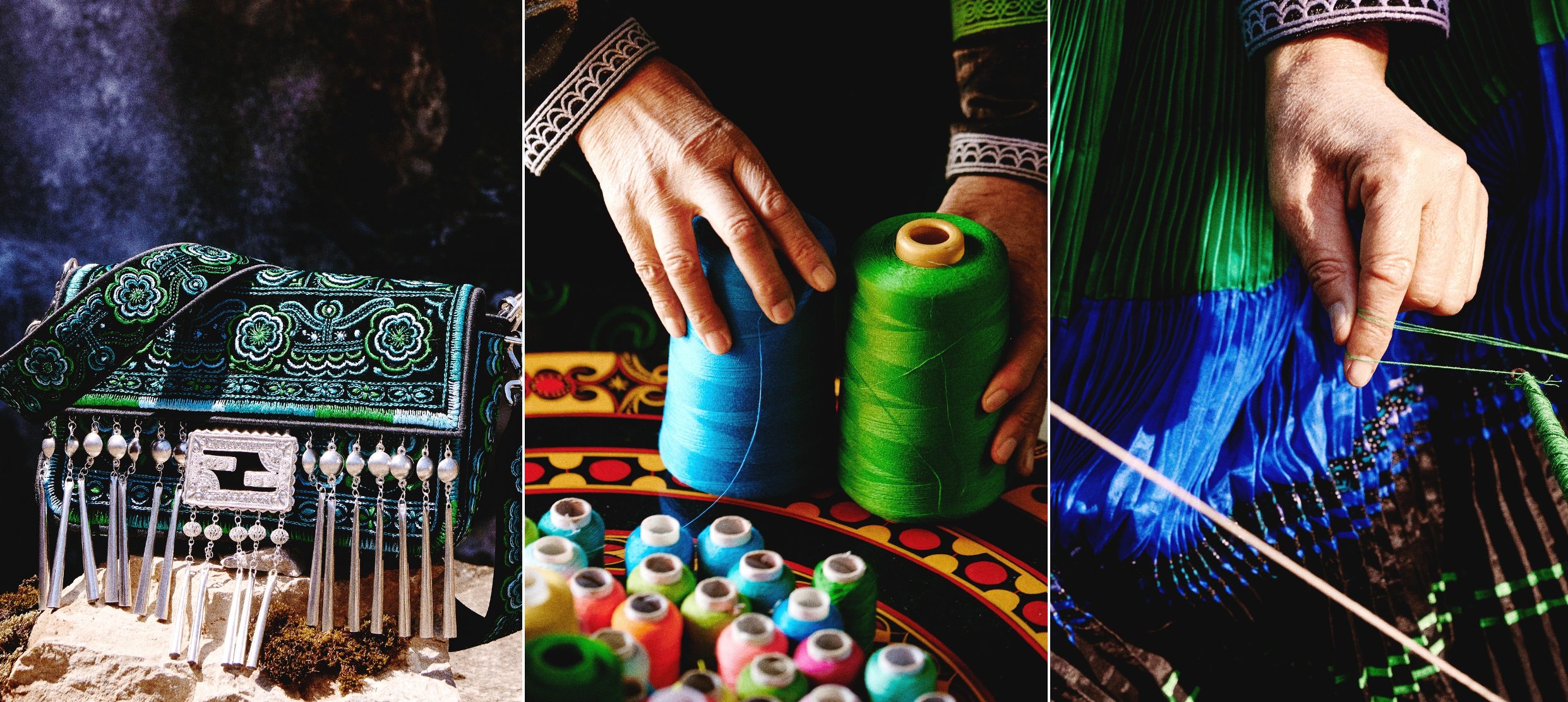
FENDI × Yi Embroidery and Silverwork
For Hand in Hand: China, FENDI worked with Chinese artisans including AXiWuZhiMo, head of the “Yi Needle Yi Thread” embroidery cooperative, and LeGuShaRi, whose family has crafted silver jewelry for 14 generations. Together, they created a Baguette bag in black fabric, embroidered with blue, green, and aqua silk threads, finished with sterling silver details.
Here, the handbag becomes a surface for dialogue.
Italian form meets Chinese handwork. Luxury becomes less about logo, and more about what the hand can still make visible.
04
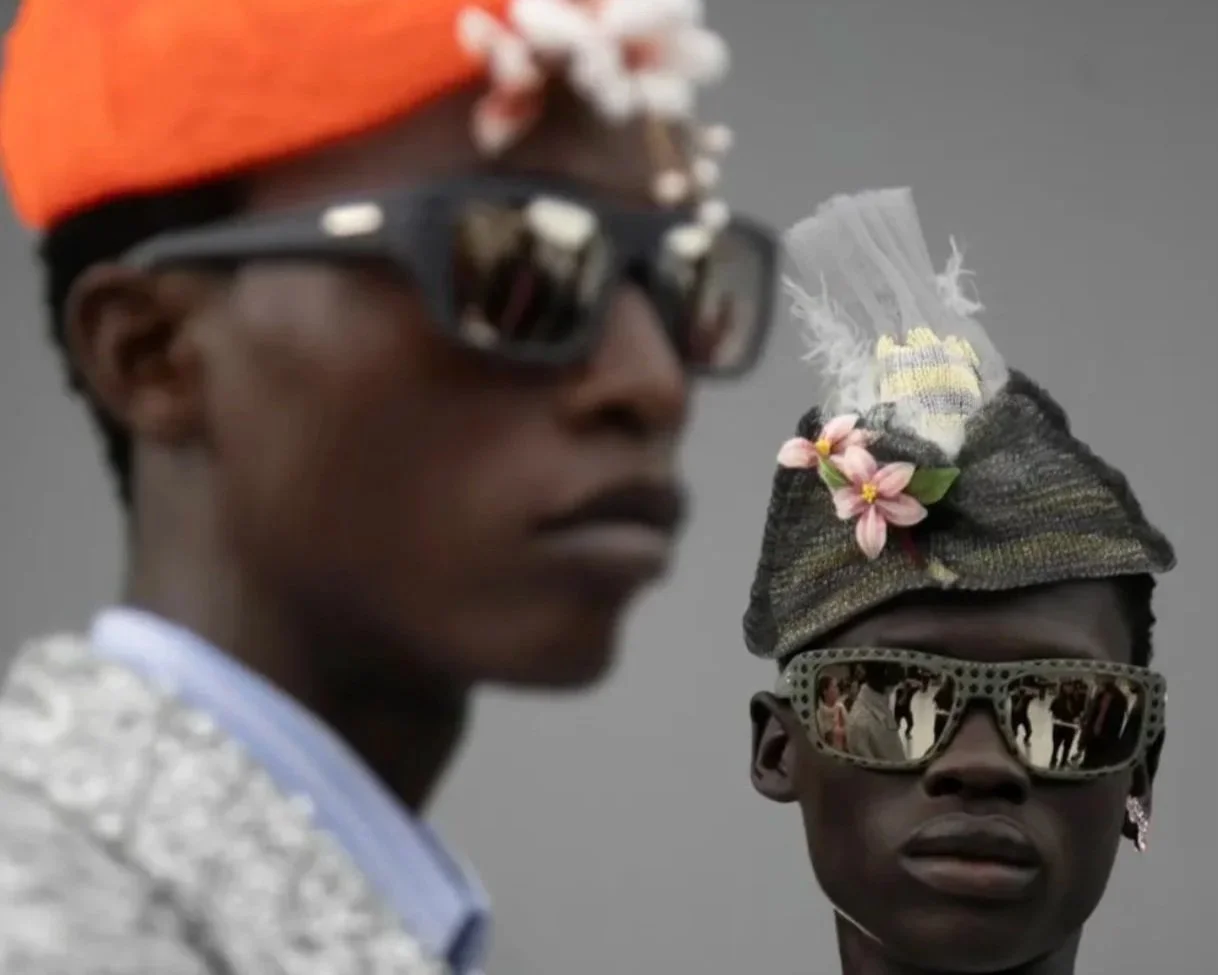
Dior × Ronghua / Velvet Flower
For Dior Men Summer 2024, traditional Chinese ronghua— silk velvet flowers associated with Nanjing craftsmanship — appeared as delicate embellishments on hats and headpieces. Light, soft, and highly detailed, ronghua introduces a different kind of craft language into fashion: not structure or utility, but ornament, symbolism, and emotional texture.
What makes ronghua compelling is its fragility. Made by hand from fine silk, it carries the softness of flower forms while preserving the discipline of meticulous technique. In the context of Dior, ronghua becomes more than decoration. It brings with it a sense of ceremony, refinement, and cultural memory — showing how an old craft can still feel quietly modern.
Beyond Decoration
These examples matter because they show that Chinese craft is not frozen in the past.
It continues to move through contemporary fashion, luxury, objects, and visual culture. Sometimes it appears as a direct technique. Sometimes as a silhouette, a surface, a closure, a pattern, or a mood.
The strongest examples do not treat heritage as costume.
They treat it as a living language.
That distinction matters.
A craft becomes powerful not because a luxury brand notices it, but because it already carries depth. Fashion may give it a new stage, but the value comes from the work itself — the hands, the region, the memory, the repetition, and the survival of technique across generations.
“Craft does not become valuable because luxury discovers it.
Luxury returns to craft because it already carries value.”
In the end, what global fashion sees in Chinese craft is not only beauty.
It sees endurance.
It sees precision.
It sees a kind of cultural memory that cannot be created overnight.
And perhaps that is why these traditions continue to reappear in luxury: not as trends, but as reminders that the future of design is often built from materials, techniques, and stories that have lasted long before fashion arrived.
